


CreatinG Health with CreatinE
By: Dr. Deborah Gordon, June 27, 2024
Creatine is probably the most overlooked—yet absolutely essential—supplement to include in any plan focused on getting or staying healthy, especially if you are a vegetarian*.
Spoiler alert: you should only read on if you want to be smarter, have better balance, stronger muscles and sturdy bones, reduce inflammation, and recover better from a bad night of sleep. Oh, and look better, while you’re at it.
Let’s start out with a little background. Creatine is a compound that circulates naturally in our bodies, most abundant in our muscles but also plentiful in our circulation and our brains. We rely on it constantly to take the energy (ATP) we make in the mitochondria (power supply) of each cell and shuttle it to the parts of that cell that need it for energy.
Our bodies are happy with abundant creatine, makes life so much easier, and to replenish our supply, we can:
- make creatine—relying on the amino acids arginine and glycine (which by the way, is the amino acid that usually shows up when we test peoples’ amino acid stores), and finished off with some methionine. (* These needed supplies are most abundant in animal sourced food, which is why vegetarians are the most likely to benefit from supplementing with creatine.)
- absorb creatine from food: again most plentiful in animal (4-legged, poultry and seafood) and a little bit in dairy
- OR obtain it as a supplement.
Since it’s primarily in muscle, it used to be thought that it was useful just for muscle-building athletes, but more recent research has revealed creatine to be useful in a host of other conditions. Part of its benefits will always accrue from its ability to keep our muscles healthy, as muscle health contributes to overall body health, especially the heart (a muscle itself), the brain and the bones.
Here’s a tiny amount of the knowledge we’ve gained about the many benefits of creatine:
- Without great effort, we lose 30% of our muscle mass by age 80, and loss of muscle makes us more frail, vulnerable, and fatigued (mentally and physically)
- In the brain, creatine is an antioxidant, reduces fatigue, protects the brain from toxins, and has a role in improving depression and bipolar disorders.
- Creatine helps protect and nourish our visual system and can protect our ears from noise-induced hearing loss.
- Creatine helps our digestive system work better from the lining of our intestines to the contractions of our stomach and the ability to absorb nutrients!
- Risk and severity of neurodegenerative diseases of all types (Parkinson’s, Huntington’s, Alzheimer’s, strokes and ALS) can be mitigated with the help of creatine.
- Creatine makes our muscles stronger, which helps us keep our bones healthy, and reduce the risk of falling: one of the great but often overlooked hazards of aging!
- And to wrap up the package, creatine supports healthy hair growth, skin vitality and resilience, so we are not only healthy, but we look better, too!
Common questions include:
But don’t I have to “workout” to build muscle?
Well, yes, that helps, but even in the absence of training, creatine is helpful.
Doesn’t creatine cause high creatinine and damage my kidneys?
Hmm, yes and ..no! and so glad you asked. CreaTINE is a component of muscle, which constantly refurbishes itself and spills some creaTININE into our bloodstream, which may show up in our blood tests, and certainly shows up in our urine. Here’s the glitch: the most common blood test used to “diagnose” kidney disease is a high blood level of creatinine, which is ridiculous, unfounded, and hazardous.
Here are things that can elevate creatinine in the blood:
- Creatine supplementation
- A great physical workout the day before
- Generally being a strong, fit and well-muscled human being.
And that human being—based on all we know—is more likely to live a long and healthy life and NOT have kidney disease.
Creatinine is a totally misleading test for kidney function that should be replaced with a test for Cystatin C, a routinely circulating substance that does not vary with muscle bulk or physical activity.
- One other note about “kidney failure” is that it can lead to muscle loss and those folks benefit from creatine supplementation to help them maintain their muscles.
- In fact, I worry MORE when I see someone’s blood level of creatinine is very low, as that says nothing about their kidneys and makes it more likely they have sarcopenia, or loss of muscles.
- Clearly we should have a whole article devoted to kidney tests, kidney failure and kidney health!
“OKAY, I’m convinced, so how do I get enough creatine?”
If you’re young, healthy, and eat a pound of animal protein from muscle meat daily, on the rare side, you probably get enough.
Okay, now for the rest of us: it is the easiest and cheapest health choice you can make.
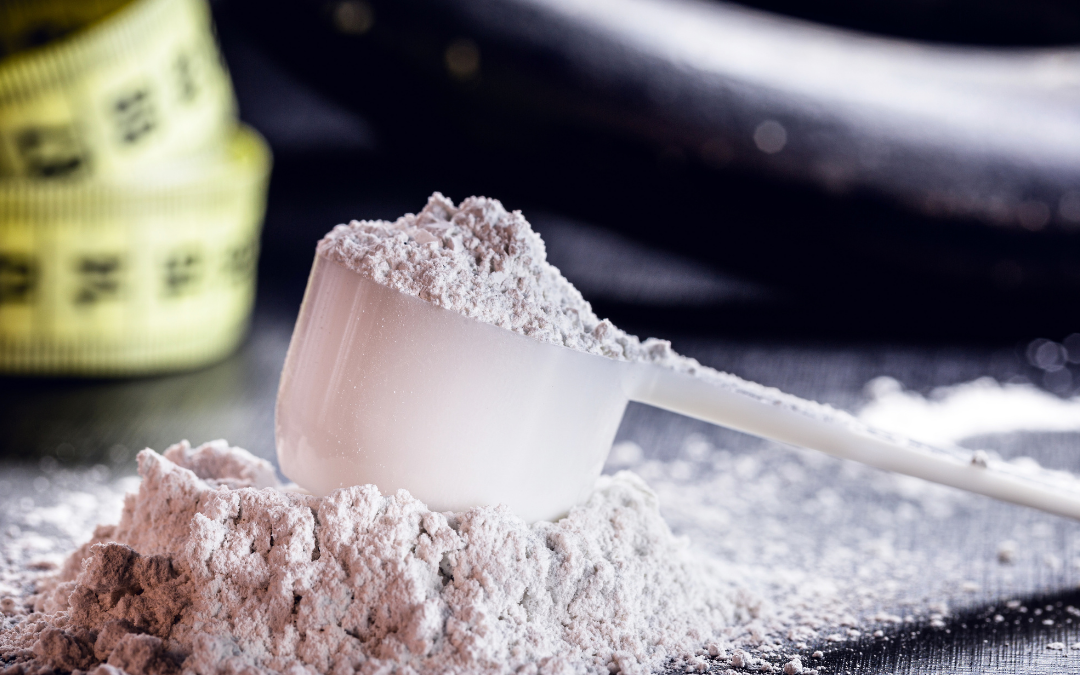
Supplement with Creatine Monohydrate, 5 grams a day.Available in powders (stirs into just about everything, with minimal taste impact) or capsules, made by countless companies, all seem to be reliable.
Creatine is about the most-studied supplement in the world and is almost universally regarded as safe. However, pregnant folks and those nursing might consult their own health care providers.
Side effects are rare but fall into two categories, primarily:
- Gastrointestinal side effects: for this, I suggest you change brands. Supposedly the “cleanest” brand is by Thorne Research, but remember, any brand gives the same health benefit. Taking the supplement with food, or better—a meal, might minimize those effects
- Creatine can interfere with sleep in two ways, so try supplementing with one or both of these if your sleep is disrupted.
- can deplete best form of vitamin B9! so supplementing with Methylfolate, 1 mg, should be plenty
- Glycine! Even though you’d think we’d have MORE glycine if we didn’t need it to make creatine, we DO still need it to make creatine and, well, it’s complicated, but creatine can deplete glycine, and supplementing with 1000-4000 mg of glycine (really no upper limit), especially at bedtime, can help.
- can deplete best form of vitamin B9! so supplementing with Methylfolate, 1 mg, should be plenty
This morning I had about 6 ounces of my mostly boring “smoothie” that I make up a quart at a time, with my creatine always included. If I actually do get around to that afternoon workout lifting weights, I will stir some into my workout drink, and drink it before, during, after the workout.
Boring Smoothie Recipe
yields about 32 oz or one quart, about 5 servings
Combine in your best blender:
- 1-2 Cups of water
- 100 grams of protein from whey or soy or egg white protein powder (for my fave, Grass Fed Whey from Amazon, that’s about 25 tbsp which is 1-1/2 cups of the whey protein powder)
- 25 grams of creatine monohydrate, usually about 5 teaspoons
- 5 scoops of a complete collagen powder, whatever its suggested serving size (all powders unflavored and unsweetened)
Blend well. It will taste like paste, ick.
Suggestions to make it boring but not icky one or more of the following:
- 1 cup of frozen wild blueberries
- Some fresh berries (Do not mix bananas with berries, by the way, interferes with their nutrients)
- 1 cup of flavored kefir
- Sweetener? I actually DO add a sweetener when I’m timing the smoothie with exercise, say before or after I go for a hike, a row, or ___________.
- My favorite sweetener combines natural (check), low in fructose (check) and good taste (check) which would be maple syrup.
- My second favorite would be a non-calorie sugar like allulose (best) or any of the other options.
Did I mention my workout drink? Much easier!
Workout Drink
I have a pint sized water bottle to which I add
- ½ packet of LMNT electrolytes
- 5 grams of creatine monohydrate
- 5 grams of d-ribose (helps with an immediate, if gentle, energy boost)
Now, let’s get out there and put these nutrients to good use, a walk anyone? Meet you in the gym later today.
